



Rossella Arcucci
Imperial College, United Kingdom
"From Data to Impact: Data Learning for AI4Good"
Abstract:
How can advances in data-driven learning translate into meaningful societal impact? This talk addresses this question through the lens of the Data Learning Paradigm, a unifying perspective that brings together Machine Learning (ML), Data Assimilation (DA), and physical knowledge to develop trustworthy, interpretable, and actionable AI solutions for societal and environmental challenges.
Bridging methodological foundations and real-world applications, this talk highlights recent advances in AI-empowered data assimilation, including latent space learning and inference, physics-informed architectures, hybrid DA-ML frameworks, and probabilistic modelling. These approaches address fundamental challenges arising from sparse, noisy, heterogeneous, and incomplete observations, while improving predictive accuracy, physical consistency, and uncertainty quantification. Particular attention is given to learning in the presence of imperfect or unknown observation operators, extending classical data assimilation towards more flexible and adaptive learning frameworks.
The potential of the Data Learning Paradigm is shown through applications to natural hazards, particularly floods and wildfires, highlighting the critical role of bridging methodological innovation and societal impact. These applications demonstrate how the synergy between ML, DA, and physical knowledge can enhance predictive capabilities, inform risk-aware decision-making, and contribute to more resilient communities.
Biography:
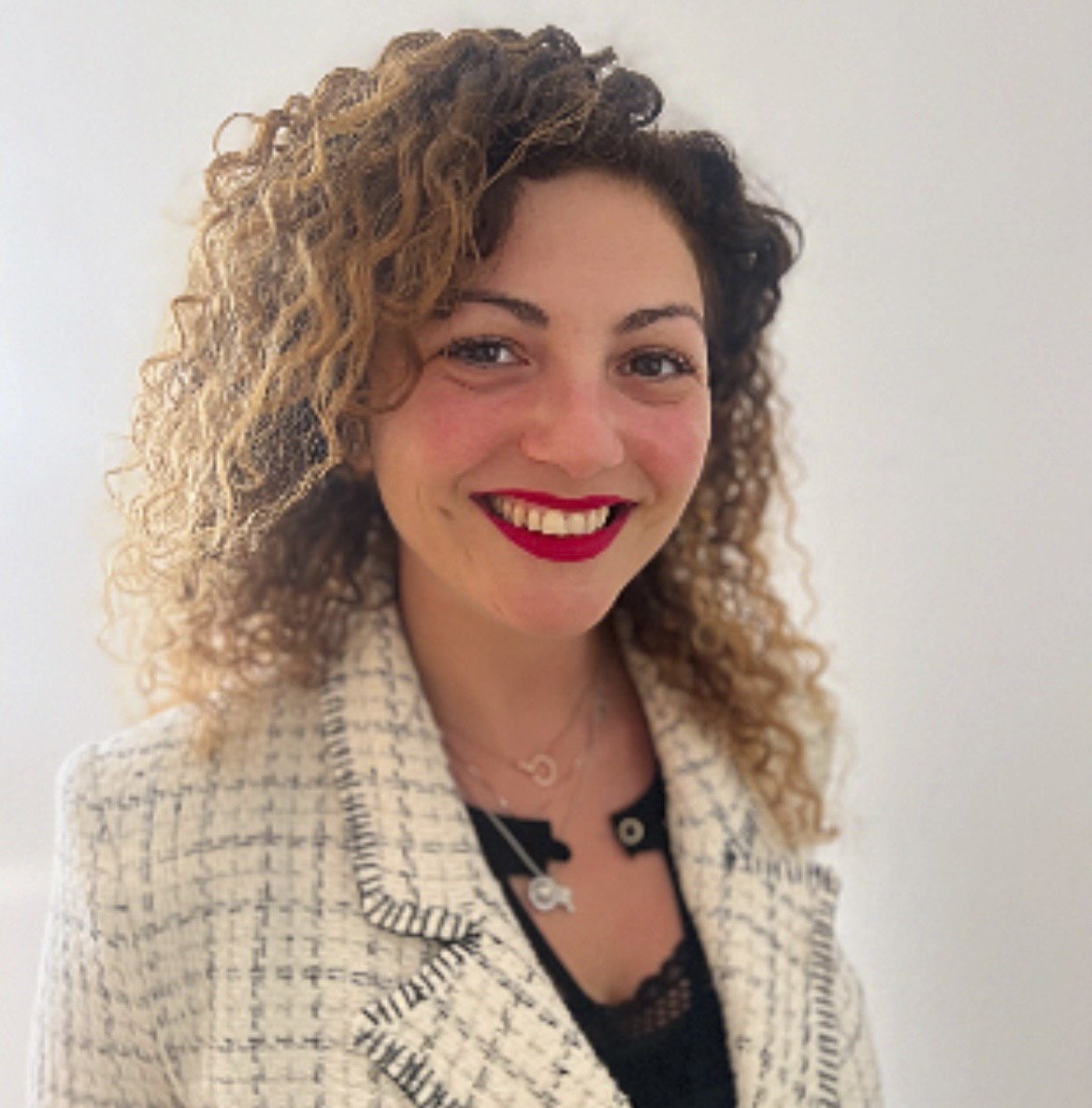
Rossella Arcucci is Associate Professor in Data Learning and AI for Good at Imperial College London, where she serves as Director of Research at Data Science Imperial, Director of the Ada Lovelace Academy, and Founder and Head of the Data Learning Research Group. She is also a Visiting Professor at the European Space Agency (ESA) Phi-Lab and an elected member of the World Meteorological Organization's Data Assimilation and Observing Systems (DAOS) group.
Her research pioneers the integration of Machine Learning, Data Assimilation, and physical modelling through the Data Learning Paradigm, advancing reliable and interpretable AI for complex real-world systems. Her work spans climate and Earth system science, natural hazards, healthcare, and engineering, with a strong emphasis on translating foundational AI research into societal impact. She actively promotes interdisciplinary collaboration and AI for Good, bridging methodological innovation with applications that address pressing global challenges.